
Having always wanted to explore more of the the North-Eastern part of India, the stories that I heard about the uniqueness of Dzukou valley and the tribal culture of Nagaland made me choose it as my next destination.

I flew from Hyderabad to Dimapur, the only airport and railhead in Nagaland. From the airport, I took an auto to Dimapur railway station, from where you will easily find shared Jeeps to Kohima. Now brace yourselves for a 3 hour long, tiring, bumpy ride on bad roads that will test your fitness and agility, after which you will reach Kohima, the capital city. It was almost sundown by the time I reached there, so I stayed there that night and headed towards a nearby village called Kigwema, the next day. If you are looking for luxurious hotels, Kohima is where you should stay put, because beyond it, in the villages, you will mostly find only basic homestays. I would suggest you to not spend too much time in Kohima and instead explore more of the villages because they are a lot more serene and peaceful.
Kigwema can act as your base camp for the trek to both Dzukou valley and Japfu peak. There are a handful of homestays available here. Unless you go during the peak season (winter/hornbill festival), you should be able to easily find rooms. I would highly recommend Akieno's homestay for their unbelievable hospitality. The heritage village, Kisama, which is also the site for Hornbill festival, is a short hike away from here. The heritage complex, showcasing the different tribes of Nagaland, their architecture and customs, is open all around the year, even when the festival is not on. There is also a museum (closed on Sundays) and a park inside the village.

I then headed to Dzukou valley, which was my primary motivation for the trip. There are two routes to Dzukou valley - the shorter but steeper route starts from Zakhama and the longer but easier route starts from Viswema. Both these places are reachable from Kigwema by a short taxi ride. I chose Zakhama since it was a lot closer to where I stayed, than Viswema. Both the routes are fairly simple and there is already a ton of information out there about the routes that, you can do the trek on your own, but if you are going solo, beware that this is a fairly lesser known trek and during off season you might find few people on the way. If you wish to, you may hire a guide from any of the surrounding villages. It took me about 4 hours to reach the rest house at the top. The temperature drops down rapidly as you go high, so go prepared with sufficient warm clothing and rain gear if you go around monsoon. While it is possible to return back the same day if you are fast enough and start early, I strongly recommend staying there overnight to explore the valley and not miss some of the unforgettable sights of the valley. The rest house has a couple of dormitories, a few rooms and a basic kitchen. I spent the remainder of the day and a good part of the next morning exploring the valley after which I trekked downhill, back again to Zakhama via the same route, and then took a taxi back to Kigwema.
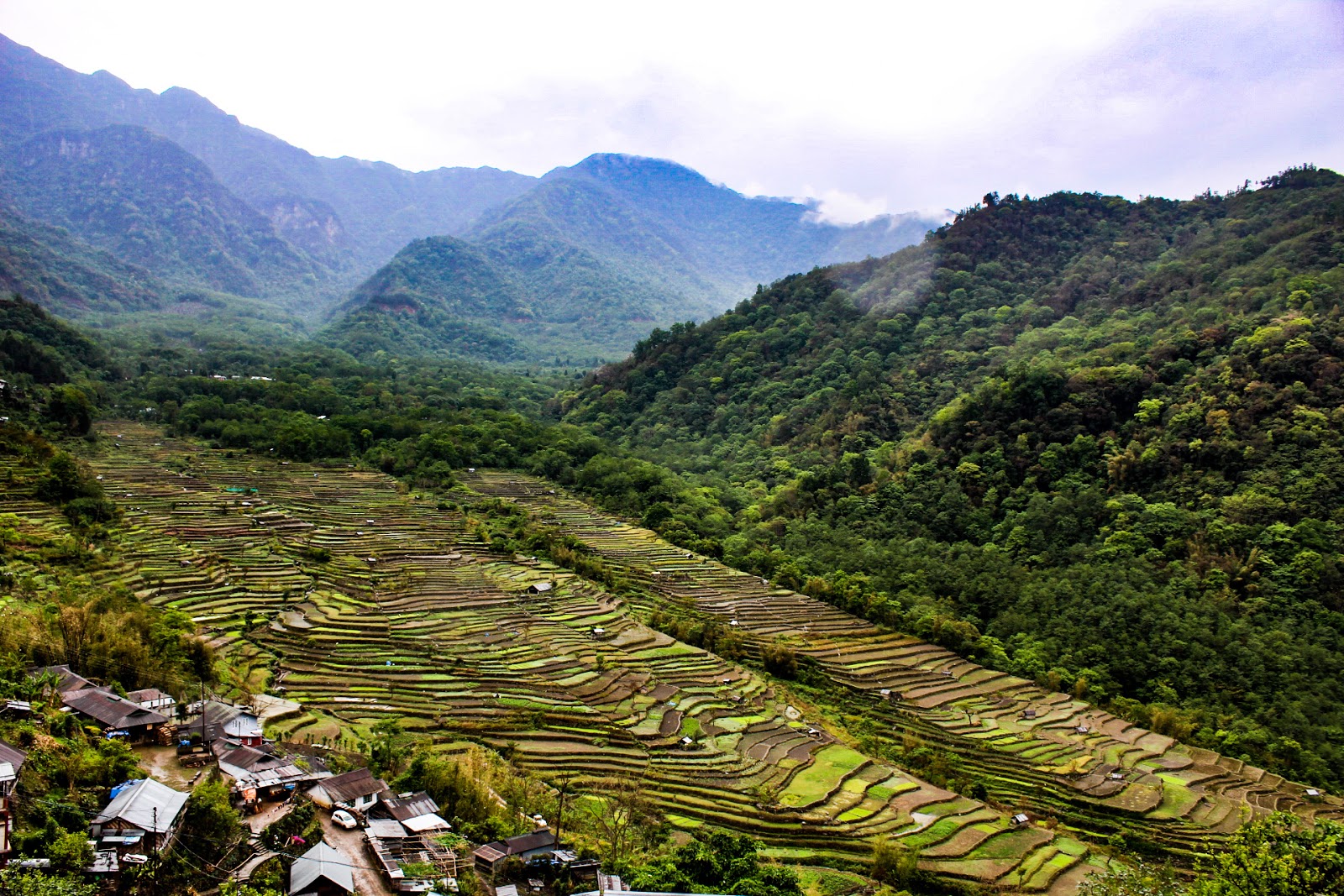
Due to unfavourable weather conditions, I skipped the trek to Japfu peak. My next stop was an Angami village, Khonoma. It is also known as the green village because hunting and cutting down trees are banned here. To reach Khonoma you first need to get to Kohima, and then from there it is an hour's drive by bus or taxi. With its magnificent paddy fields, intriguing architecture and greenery all around, taking a stroll around the village is a pleasant experience by itself, but hiring a guide is recommended if you wish to learn more about it. There is only one bus out of Khonoma, at 5.30 A.M. So, unless you have arranged for your own private vehicle, you need to stay there overnight and take the bus next morning to reach Kohima, which is what I did. While in Kohima, do visit the war memorial.
My next plan was to visit Mon, in the northern part of Nagaland, where the Konyaks live. A bus from Kohima to Mon would take about 14 hours on bad roads, overnight. So I instead chose to go back to Dimapur, and take a train to Bhojo in Assam (the train would take 4-5 hours). From Bhojo take an auto to Sonari, and then you can take a taxi or a bus and reach Mon in 3 hours. I then went to an intriguing village called Longwa, half of which lies in India, and the other half in Myanmar. This is the only part of Nagaland where you can meet headhunters. Other attractions include the Angh's house, through which the international boundary line runs and the border pillar which gives a vantage point to both sides of the village. You can reach Longwa from Mon by a shared jeep, but the seats are limited and you need to book in advance.

To return back to Hyderabad, I did not want to go all the way back to Dimapur to take a flight, so I instead went to Dibrugarh in Assam which is the closest airport to Mon. You can take a shared jeep from Mon to Sonari. Based on when you reach Sonari, you may or may not find a direct bus to Dibrugarh. I could not get one, so I took a bus to Moran, and then another one to Dibrugarh. It takes 3 hours to reach Sonari, and another 2.5 hours from there to Dibrugarh. The earliest public transport out of Mon is at 7 A.M (It may get further delayed based on how may seats fill up) and there is none on Sundays, so you may want to plan accordingly.
All domestic tourists need an Inner Line Permit to visit Nagaland, which can be obtained in person in Delhi, Kolkata, Guwahati, Shillong (you may need to check the official site for the latest list) or if you are unable to do so, you can get it done via a private tour operator by sending scanned copies of your ID.
I flew from Hyderabad to Dimapur, the only airport and railhead in Nagaland. From the airport, I took an auto to Dimapur railway station, from where you will easily find shared Jeeps to Kohima. Now brace yourselves for a 3 hour long, tiring, bumpy ride on bad roads that will test your fitness and agility, after which you will reach Kohima, the capital city. It was almost sundown by the time I reached there, so I stayed there that night and headed towards a nearby village called Kigwema, the next day. If you are looking for luxurious hotels, Kohima is where you should stay put, because beyond it, in the villages, you will mostly find only basic homestays. I would suggest you to not spend too much time in Kohima and instead explore more of the villages because they are a lot more serene and peaceful.
Kigwema can act as your base camp for the trek to both Dzukou valley and Japfu peak. There are a handful of homestays available here. Unless you go during the peak season (winter/hornbill festival), you should be able to easily find rooms. I would highly recommend Akieno's homestay for their unbelievable hospitality. The heritage village, Kisama, which is also the site for Hornbill festival, is a short hike away from here. The heritage complex, showcasing the different tribes of Nagaland, their architecture and customs, is open all around the year, even when the festival is not on. There is also a museum (closed on Sundays) and a park inside the village.
I then headed to Dzukou valley, which was my primary motivation for the trip. There are two routes to Dzukou valley - the shorter but steeper route starts from Zakhama and the longer but easier route starts from Viswema. Both these places are reachable from Kigwema by a short taxi ride. I chose Zakhama since it was a lot closer to where I stayed, than Viswema. Both the routes are fairly simple and there is already a ton of information out there about the routes that, you can do the trek on your own, but if you are going solo, beware that this is a fairly lesser known trek and during off season you might find few people on the way. If you wish to, you may hire a guide from any of the surrounding villages. It took me about 4 hours to reach the rest house at the top. The temperature drops down rapidly as you go high, so go prepared with sufficient warm clothing and rain gear if you go around monsoon. While it is possible to return back the same day if you are fast enough and start early, I strongly recommend staying there overnight to explore the valley and not miss some of the unforgettable sights of the valley. The rest house has a couple of dormitories, a few rooms and a basic kitchen. I spent the remainder of the day and a good part of the next morning exploring the valley after which I trekked downhill, back again to Zakhama via the same route, and then took a taxi back to Kigwema.
Due to unfavourable weather conditions, I skipped the trek to Japfu peak. My next stop was an Angami village, Khonoma. It is also known as the green village because hunting and cutting down trees are banned here. To reach Khonoma you first need to get to Kohima, and then from there it is an hour's drive by bus or taxi. With its magnificent paddy fields, intriguing architecture and greenery all around, taking a stroll around the village is a pleasant experience by itself, but hiring a guide is recommended if you wish to learn more about it. There is only one bus out of Khonoma, at 5.30 A.M. So, unless you have arranged for your own private vehicle, you need to stay there overnight and take the bus next morning to reach Kohima, which is what I did. While in Kohima, do visit the war memorial.
My next plan was to visit Mon, in the northern part of Nagaland, where the Konyaks live. A bus from Kohima to Mon would take about 14 hours on bad roads, overnight. So I instead chose to go back to Dimapur, and take a train to Bhojo in Assam (the train would take 4-5 hours). From Bhojo take an auto to Sonari, and then you can take a taxi or a bus and reach Mon in 3 hours. I then went to an intriguing village called Longwa, half of which lies in India, and the other half in Myanmar. This is the only part of Nagaland where you can meet headhunters. Other attractions include the Angh's house, through which the international boundary line runs and the border pillar which gives a vantage point to both sides of the village. You can reach Longwa from Mon by a shared jeep, but the seats are limited and you need to book in advance.
To return back to Hyderabad, I did not want to go all the way back to Dimapur to take a flight, so I instead went to Dibrugarh in Assam which is the closest airport to Mon. You can take a shared jeep from Mon to Sonari. Based on when you reach Sonari, you may or may not find a direct bus to Dibrugarh. I could not get one, so I took a bus to Moran, and then another one to Dibrugarh. It takes 3 hours to reach Sonari, and another 2.5 hours from there to Dibrugarh. The earliest public transport out of Mon is at 7 A.M (It may get further delayed based on how may seats fill up) and there is none on Sundays, so you may want to plan accordingly.
All domestic tourists need an Inner Line Permit to visit Nagaland, which can be obtained in person in Delhi, Kolkata, Guwahati, Shillong (you may need to check the official site for the latest list) or if you are unable to do so, you can get it done via a private tour operator by sending scanned copies of your ID.


